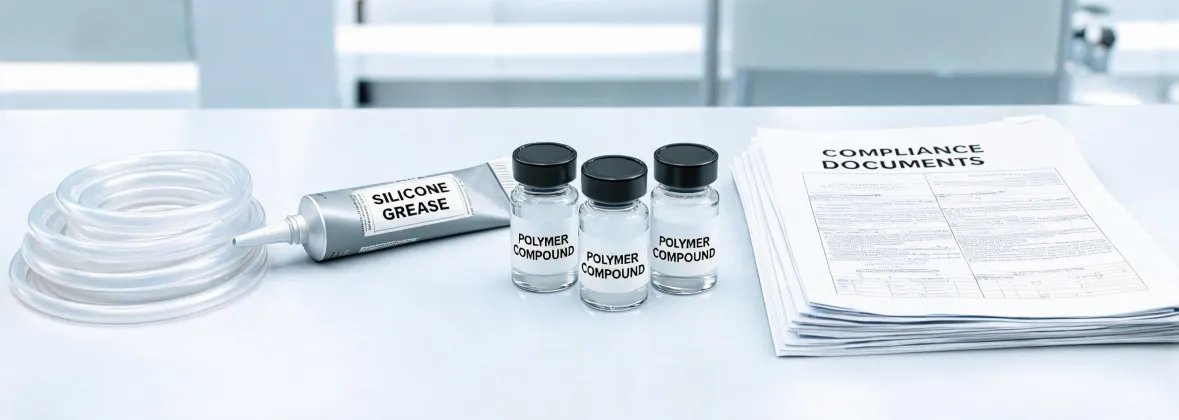
In my role coordinating emergency material sourcing for industrial clients, I've had to make some pretty fast decisions. One that still sticks with me: a customer called on a Tuesday morning needing 500 silicone candle molds delivered by Friday. Their production line had just shut down because the original thermoplastic molds cracked. Normal lead time for a custom thermoplastic mold? Two to three weeks. They were panicking.
We ended up going with a two-part silicone from Shin-Etsu — cured in 24 hours, demolded the next day. The alternative was losing a $15,000 contract. That experience got me thinking: in an emergency, how do you choose between silicone and thermoplastic? Here's what I've learned from coordinating over 200 rush orders.
Why This Comparison Matters (and the Framework I Use)
When you're under a tight deadline, every material choice has trade-offs. The three dimensions I always compare are:
- Speed to production — how fast can I get the first unit in hand?
- Application fit — will it survive the actual use case?
- Cost transparency — what's the real total cost, not just the initial quote?
Most articles tell you “silicone is better for X, thermoplastics for Y.” But in practice, the decision depends on how much time you’ve got, what you’re making, and whether the supplier is honest about fees. Let’s walk through each dimension.
Dimension 1: Speed — How Quickly Can You Get Parts?
Silicone (with a supplier like Shin-Etsu)
Liquid silicone rubber (LSR) and room-temperature-vulcanizing (RTV) silicones can be cast or injection-molded with relatively short lead times. For small to medium batches (say, 50–500 pieces), a silicone mold can be made in 24–48 hours, and parts can be cured within another 24 hours. I’ve seen Shin-Etsu’s silicone grease used as a mold release, which speeds up demolding — small but critical when every hour counts.
For roofing silicone applications, the material itself cures rapidly with moisture, so emergency roof repairs can be done in a single day. The real bottleneck is not the material — it’s the supplier’s willingness to prioritize your order.
Thermoplastics
How are thermoplastic polymers made? Most are produced via injection molding or extrusion, which requires custom tooling. A steel or aluminum mold for a candle mold or a roofing clip can take 2–6 weeks to machine. Even with rapid prototyping (3D printing), you’re looking at days for a single piece, not a production run. For a batch of 500, you need a proper mold — and that kills any rush timeline.
Verdict on speed: Silicone wins hands down when you need parts in under a week. Thermoplastics only make sense if you already have tooling.
Dimension 2: Application Fit — Will It Work in the Real World?
Silicone candle molds
Silicone's flexibility means easy demolding even for complex shapes. It withstands temperatures up to 200–250°C (depending on the grade), which is safe for candle wax. It also doesn't stick to the wax — that's why it's the industry standard. Honestly, I'm not sure why anyone would use thermoformed plastic for candle molds; it's a guessing game with release agents.
Roofing silicone
For outdoor sealing, silicone's UV resistance and elongation (often >400%) make it far more durable than thermoplastic sealants like polypropylene or PVC, which can become brittle in cold weather. Shin-Etsu's roofing silicone products are specifically formulated for long-term adhesion to concrete and metal. In contrast, many thermoplastic sealants require primers and still fail after 3–5 years of sun exposure.
Verdict on application: Silicone is better for flexible, high-temperature, or outdoor applications. Thermoplastics may be fine for indoor, low-stress parts where rigidity is needed.
Dimension 3: Cost Transparency — What Does “Cheap” Really Cost?
Here’s where my “transparency breeds trust” perspective kicks in. I’ve made the mistake of assuming a lower quote meant a lower total cost.
Assumption failure: Last year, I steered a client toward a thermoplastic supplier because their per-unit price was 30% lower than Shin-Etsu’s silicone. Turned out the tooling cost was $8,000, and they didn't include rush fees in the initial quote. The total job ended up costing 40% more, and we lost three weeks. I learned never to assume a low price includes everything you need.
Shin-Etsu, as a full-line silicone manufacturer, typically offers transparent quoting: material cost, mold cost (if any), and shipping. No hidden “setup” or “expedite” fees that appear after you commit. Their $500–$1,000 premium on a rush order is usually the final number. With thermoplastics, you often see base pricing that looks great, then adders for tooling, sample approval, and overtime — it's way more than you'd budget for.
Why does this matter? Because in an emergency, you can’t afford surprises. I'd rather pay $5,000 for a guaranteed, transparent quote than $3,500 base that balloons to $7,000 when we’re already committed.
When to Choose Each — Practical Scenarios
Go with silicone (Shin-Etsu) when:
- You need parts in 1–5 days
- Your product has complex undercuts (candle molds, gaskets, seals)
- It will be exposed to heat, UV, or weather (roofing, automotive)
- You value clear, upfront pricing with no hidden fees
Go with thermoplastics when:
- You already have tooling or a large existing production run
- You need extremely high volume (100,000+) where tooling cost amortizes
- The part must be rigid and dimensionally precise (e.g., enclosures)
- You have weeks of lead time and a defined budget for tooling
To be fair, thermoplastics are excellent for mass production. But if you're reading this because you're in a hurry (like my candle mold client), silicone will save your deadline — and your sanity.
Final Thoughts
The next time you’re comparing materials for an urgent project, remember: speed, fit, and transparency are the three pillars. I've seen too many buyers get seduced by rock-bottom thermoplastic quotes, only to get stuck with tooling delays and surprise fees. Shin-Etsu's silicone products — whether it's their silicone grease for lubrication, silicone rubber for molds, or roofing sealants — have consistently delivered on time with predictable costs.
Granted, I'm not a polymer chemist. Don't hold me to exact cure times; always verify with the supplier. But based on hundreds of rush orders, the pattern is clear: when the clock is ticking, silicone (from a trustworthy supplier) is the safer bet.
— A veteran of last-minute deadlines