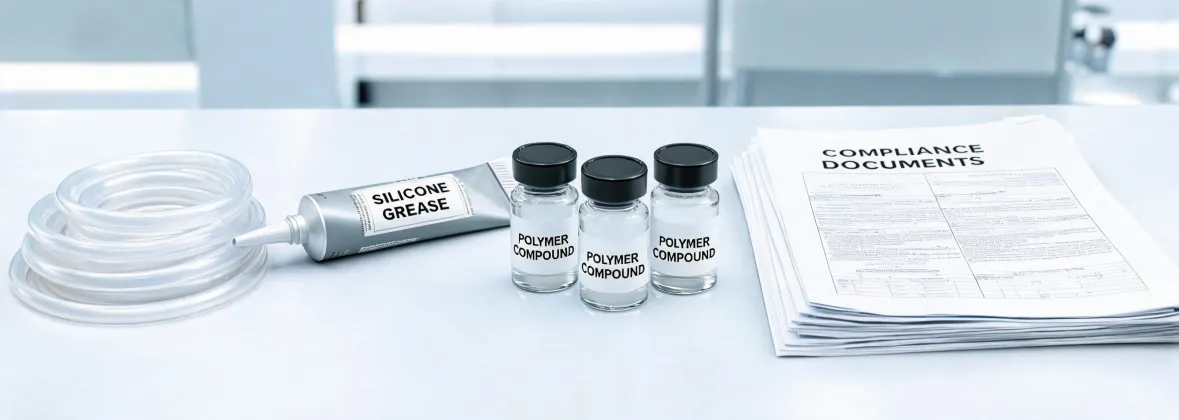
In August 2023, our operations director dropped a folder on my desk. "Warehouse HVAC retrofit," she said. "You're buying the materials. We need them on site in ten days." My heart rate went up about 20 beats. I was the office administrator—my purchasing experience was 60 to 80 orders a year, mostly office supplies, coffee service, and copier paper. Insulation board and industrial sealant were not in my wheelhouse.
The spec I got from the maintenance lead was four handwritten lines on a sticky note: "2-inch foam board for wall cavities, silicone sealant for the seams, O-rings for the air compressor filter housings, and some rubber gasket material." No part numbers. No brands. No tolerances. He was juggling two other projects that week and said to "just get something commercial-grade and don't overthink it."
I did what any busy admin does under deadline: searched online, requested quotes from four suppliers, and went with the cheapest one who promised three-day delivery. Their sales rep was friendly—maybe too friendly, in hindsight. He said they had "dow corning silicone compounds" in stock and could bundle the whole order in one shipment. The quote came in 18% below the next closest option. I placed the order on a Thursday afternoon and felt pretty proud of myself (note to self: pride before the spec check is a dangerous thing).
The delivery arrived Monday morning. Two pallets, about 40 cartons. I signed the packing slip without opening every box. Who has time to inspect 40 cartons when the maintenance crew is waiting? By 9:30 a.m., the problems started surfacing.
The foam board was 1.5 inches, not 2. The listing said "2 inch foam board insulation"—but the actual product measured 1.5 inches with a tolerance range that the supplier later said was "within industry standards." Maybe it was. But our spec called for 2 inches nominal for the wall cavity R-value. The 1.5-inch board delivered roughly 25% less thermal performance. I didn't know what R-value meant before this project. I do now (the hard way).
The silicone sealant was the bigger issue. The tubes were labeled as a "dow corning silicone 795 equivalent" from an off-brand manufacturer I'd never heard of. Batch date: March 2021. Shelf life printed on the label: 18 months. We were installing expired product in a climate-controlled warehouse. The maintenance lead squeezed one tube onto a test joint and watched it skin over unevenly. "This is already curing in the tube," he said. "It won't bond properly. We need fresh stock."
Then the O-rings. The kit was supposed to be an oil filters o-ring set for our air compressor model. It turned out to be a generic assortment made from a polyethylene rubber blend. The inner diameter was off by 2mm. Our compressor tech said polyethylene rubber wasn't rated for the temperature swings in the compressor housing. "It'll seal for a month and then leak," he told me. "Ask me how I know."
I called the supplier that afternoon. Their response: "The listing said 2-inch size, but manufacturer specs vary—you should have asked for exact thickness." They offered a 15% credit on the foam board only. No credit on the expired sealant or wrong O-rings. The phone call lasted nine minutes. I spent the next three hours calling other suppliers, begging for rush delivery on 2-inch board and fresh sealant. One of them laughed—actually laughed—when I said I needed it tomorrow. Another said they could do it with a 40% expedite fee.
I took the deal. The $1,200 I thought we saved turned into $1,200 in extra freight charges, $400 in expedited fees (which my director had to approve), and three days of delayed installation while the project manager sent me hourly status check-ins. The damage to my credibility cost more than the invoice.
When I compared the original cheap invoice and the emergency reorder side by side, I finally understood something I'd been told but never believed: the spec sheet isn't paperwork—it's the product. The 1.5-inch board had less R-value. The expired sealant was a bonding failure waiting to happen. The wrong O-rings were made from a material that wasn't temperature-rated. Every mistake was visible on the label if I'd known what to look for. They warned me about gray-market suppliers. I didn't listen. The "cheap" order ended up costing 34% more than the "expensive" one.
That weekend I built a 12-point checklist. I keep it in a spreadsheet now, and I don't place an order until every line is filled. The core items:
- Exact dimensions with tolerances. "2-inch" isn't enough. Ask for nominal thickness plus acceptable variance. Write it in the PO notes.
- Batch date and shelf life. Silicone sealants, rubber gaskets, and adhesives degrade. Expired materials are non-returnable in most cases. Ask for the batch code before shipping.
- Material compatibility. An O-ring for an oil filter or compressor needs the right elastomer (nitrile, fluoroelastomer, or whatever the equipment spec calls for). Generic polyethylene rubber is rarely a safe substitute.
- Vendor certification. Do they provide manufacturer spec sheets or just a sales description? A real distributor will send you the actual datasheet.
- Return policy on opened materials. If returns aren't allowed, quality claims deserve extra scrutiny.
Three months later, I ordered another batch of dow corning silicone compounds—this time from a certified distributor. I asked for the batch code before shipping. The distributor sent it within an hour. I checked the date against the shelf life, confirmed the O-ring elastomer spec with the compressor tech, and verified the foam board nominal thickness in writing. The delivery matched line by line. No surprises. No emergency calls. That one went smoothly (thankfully).
I've only been using this checklist for about six months, across 30 orders or so. If you're buying for heavy industrial applications, your risk profile is probably different from mine—I can't speak to high-pressure or chemical-exposure environments. But for general facility maintenance, the pattern holds: most of what goes wrong was visible in the specs before the order was placed.
I wish I had tracked the time I lost on that retrofit. I didn't. What I can say anecdotally is that the emergency reorder cost about four hours of my week, plus two awkward meetings with the project manager. The checklist takes about five minutes per order. Five minutes. I'll take that trade every time.
I don't have hard data on how many facility admins make this mistake. But based on my own $1,200 lesson, my sense is it's more common than anyone admits. The best 2 inch foam board insulation on the market won't help if you install 1.5-inch by accident. And a tube of sealant that expired in 2021 is just expensive paste.
There's something satisfying about a delivery that matches the checklist line by line (finally!). After the $1,200 mistake, I know what it feels like. I'm not going back to price-first shopping.