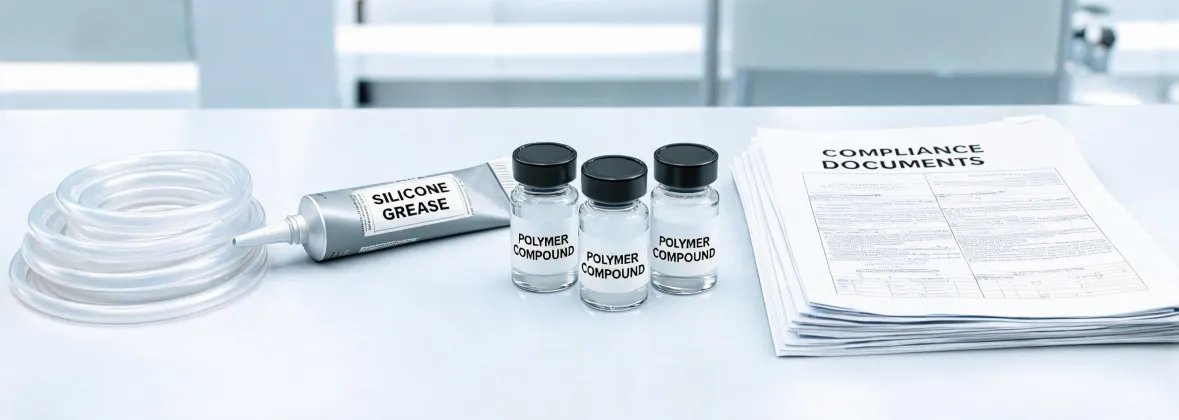
That Sinking Feeling When a $3,200 Order Fails
I'll never forget the feeling. It was a Tuesday morning in September 2022. We had just received a rush order of custom sealing gaskets for a medical device assembly line. The client needed 2,000 units shipped by Friday. I'd specified 'silicone rubber seals' on the PO, checked the box, and moved on.
Then the call came. The seals arrived on time, but they were failing on the line within 12 hours. The material had swelled. It looked like someone had left them in a solvent bath. The production manager was furious. The $3,200 order? Straight to the trash. Plus a 1-week delay that cost us a chunk of the client's next project.
Everything I'd read about sealing materials said silicone was the go-to for high-temp, flexible applications. In practice, I found out the hard way that 'silicone' isn't a one-size-fits-all answer. My assumption was the problem. I hadn't asked the right questions about the operating environment.
The Real Problem: It's Not What You Think
At first, you'd think the problem was simple: I ordered the wrong material. But the deeper issue is more nuanced and, honestly, way more common. The mistake wasn't picking silicone over something else. It was a failure in the specification process itself.
Here's the thing: when an engineer sees 'silicone rubber seals,' they think of one thing. A purchasing agent sees something else. A supplier sees a third. The word 'silicone' is a category, not a specification. And when you're dealing with high-stakes industrial applications, categories can kill you.
I once had a conversation with a senior engineer at Shin-Etsu Silicones of America (a company I've since become pretty familiar with). He told me that most specification failures aren't because the material can't do the job. They're because the spec sheet didn't match the real-world conditions. The silicone you use for a baking mat is worlds apart from the silicone you'd use for a semiconductor gasket. They're not interchangeable. That seems obvious in hindsight, but it's a trap I've fallen into more than once.
The Hidden Cost of 'Good Enough'
The silent killer in material selection is what I call the 'assumption stack.' You assume silicone works because a similar project used it. You assume the supplier will catch your mistake. You assume the deadline means you don't have time to double-check. Each assumption adds risk, but it doesn't feel risky at the time. It feels efficient.
That $3,200 order wasn't a random error. It was the culmination of a dozen small shortcuts I'd taken over the years, all of which had worked out fine until they didn't. The conventional wisdom is to always trust your experience. My experience with 200+ orders suggests that relationship consistency often beats marginal cost savings, but only if the relationship comes with rigorous spec review.
The Cost of Not Getting It Right
A lot of people will tell you the cost of a mistake is just the price of redoing the order. That's wrong. The real cost is much higher and harder to quantify.
- Direct cost: $3,200 for the product. $890 for the rush redo. $450 in wasted shipping. Total: $4,540.
- Indirect cost: The production delay cost our client roughly $15,000 in lost uptime. We paid $400 extra for the rush delivery on the replacement order, and it still arrived a day late.
- Opportunity cost: That client put their next three projects up for bid. We didn't win one. The trust was gone.
- Credibility cost: Harder to measure, but I noticed our follow-up questions were met with visible skepticism for months.
In March 2024, we faced a similar situation with a tight deadline. The standard option was going to take 3 weeks. The budget option was 20% cheaper but had no guarantee. We paid a premium for a guaranteed delivery slot. Had 2 hours to decide before the cutoff for priority processing. Normally I would have gotten multiple quotes, but there was no time. Went with a vendor I'd vetted based on their process transparency. Even after hitting 'confirm,' I kept second-guessing. What if they didn't deliver? The two weeks until delivery were stressful. But the parts arrived on time and were perfect. That peace of mind was worth the extra cost.
I didn't fully understand the value of detailed specifications until that first $3,200 mistake. Now I always ask: what's the real risk if this doesn't work? The answer changes how you prioritize.
The Fix: What I Changed (and What You Can Too)
I'm not going to give you a ten-step checklist here. The answer is simpler than that. After the third rejection in Q1 2024, I created a pre-check principle that our team now uses. It's not a document. It's a habit: never assume a material category equals a solution.
Specifically, this means:
- Define the failure mode first. Don't start with 'I need silicone.' Start with 'I need something that can handle 200°C continuous heat, exposure to brake fluid, and a compression set of less than 15%.'
- Ask the supplier to push back. If you give a spec and they just say 'yes,' that's a red flag. A good supplier (like those at Shin-Etsu) will ask you hard questions about your application.
- Budget for a prototype. Yes, it adds lead time. But a $500 prototype that reveals a flaw is a bargain compared to a $3,200 production run that fails.
This approach isn't revolutionary. It's just painfully learned. The premium you pay for a supplier who asks these questions (rather than just processing your PO) is an investment in delivery certainty. And in a world where deadlines are tight and margins are thin, certainty is the most valuable thing you can buy.
For anyone out there wondering if they should take the time to get a proper material spec, or if they should just trust their gut on 'silicone' for a basic seal: don't learn this one the hard way. The right partner will save you more than just money.