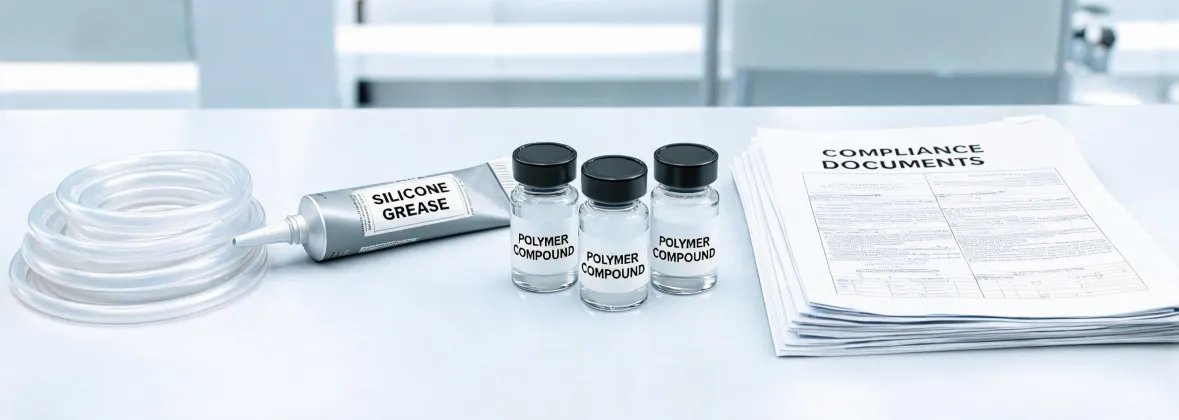
The Day a $5 Part Cost Us $2,400
When I took over purchasing in 2020, I thought I had it figured out. Our office maintenance supplies—everything from printer toner to door hinges—ran through me. About $150,000 annually across 12 vendors. My VP wanted cost reductions. So I squeezed margins. Hard.
Then came the Honda PP-T20 incident.
One of our engineers needed a specific plastic part for a test fixture. The spec called for a Honda PP-T20 grade compound, a polypropylene blend often used in automotive interiors. I found a "compatible" alternative for 40% less. Truth be told, I didn't even look up what PP-T20 meant. I just saw a lower price and approved the order.
The part arrived. It looked right. It fit. But within 72 hours of testing, the fixture seized. The material had degraded from the heat and friction. The $5 savings on the part turned into a $2,400 bill for a replacement fixture plus a day of lost lab time. I ate that expense report personally—out of my department budget. My VP was not pleased.
That was the moment I started researching materials, not just prices.
What I Learned About PTFE Compounds and Grease
The root cause wasn't just the plastic. It was the lubricant. The fixture required a specialized grease, and we had been using a generic multi-purpose tube from the hardware store. The engineer who originally specced the job had written "Shin-Etsu silicone grease" on the drawing. I ignored it. I didn't know who Shin-Etsu was.
Now I do.
Shin-Etsu is one of the world's largest silicone manufacturers. Their Shin-Etsu silicone grease isn't cheap—a tube might cost 2-3x what you'd pay for a generic. But after that failure, I looked up the difference. PTFE compounds (like the ones used in high-performance greases) handle extreme temperatures and pressure without breaking down. Generic grease? It cooks, cakes, and fails.
"From the outside, it looks like grease is grease. The reality is that the wrong lubricant can destroy equipment in hours. People assume a cheaper part is a better deal. What they don't see is which costs are being hidden or deferred."
Honestly, I'm not sure why I never learned this earlier. My best guess is that in an office environment, we just don't think about the engineering behind consumables. We buy what's available, what's cheap. But after managing relationships with 8 vendors for different needs, I've learned that material science matters more than purchase price.
The Thermosplastic Polyurethane vs. Silicone Debate
A few months later, another cross-functional project came up. Someone on the product team asked about thermoplastic polyurethane vs. silicone for a gasket application. I didn't know the answer offhand—but this time, I didn't just guess. I called a technical rep at Shin-Etsu.
Here's what I learned: thermoplastic polyurethane (TPU) has excellent abrasion resistance and flexibility. It's great for dynamic seals. But silicone handles wider temperature ranges and resists aging better. The right choice depends on the specific use case. In our situation, the engineer needed thermal stability. So silicone was the call.
This worked for us, but our situation was a controlled lab environment with predictable temperatures. Your mileage may vary if you're dealing with outdoor exposure or chemical contact. I can only speak to our context. If you're dealing with different conditions, the calculus might be different.
How I Now Calculate Total Cost
That $2,400 lesson changed how I evaluate suppliers. I now calculate TCO before comparing any vendor quotes. Here's my framework:
- Unit price – The sticker cost. Everyone knows this one.
- Hidden fees – Shipping, handling, minimum order surcharges. That $5 "savings" often disappears.
- Time cost – How many hours do I spend vetting an unknown vendor vs. a trusted one?
- Risk cost – What's the probability of failure? And what's the cost of that failure? In our case: $2,400.
So glad I started doing this. Almost didn't, actually. If I had continued buying on price alone, I would have repeated the same mistake over and over. Dodged a bullet when I realized that the $500 quote turned into $800 after shipping, setup, and revision fees. The $650 all-inclusive quote was actually cheaper.
To be fair, not every purchase requires this level of analysis. For office supplies like pens and paper, lowest price is usually fine. But for anything that touches equipment performance—lubricants, plastics, specialty compounds—you need to think in terms of total cost over the product's life.
The Bottom Line
I still buy Shin-Etsu silicone grease for our sensitive fixtures. I still specify PTFE compounds where heat resistance matters. I still check what Honda PP-T20 actually means before ordering substitutes. It costs more on paper, but over the last 18 months, we've had zero material-related failures. That's not a coincidence.
The most frustrating part of this whole journey: I could have avoided the whole mess if I had just read the spec sheet. You'd think a simple document would be enough. But when you're juggling 60-80 orders a year, it's easy to skim. I don't anymore.
Granted, this requires more upfront work. But it saves time later. Trust me on that one.