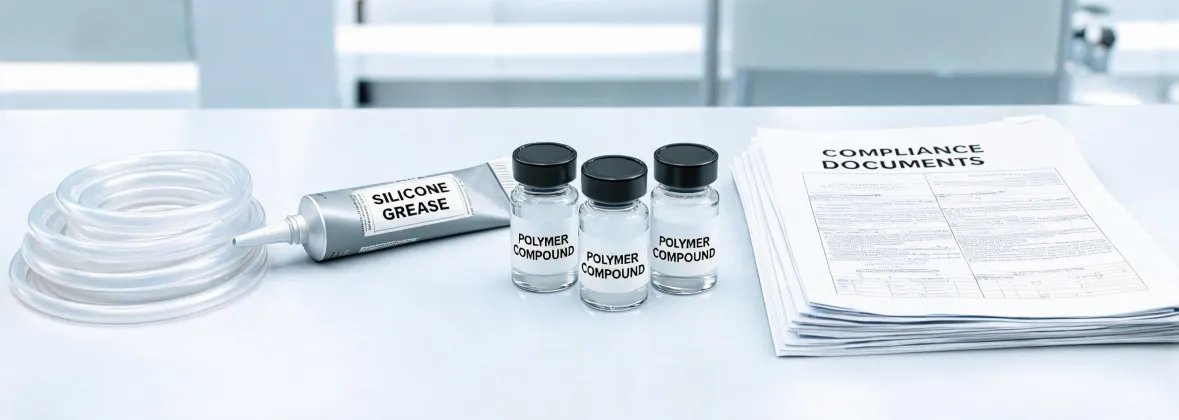
Not every supplier can be your everything supplier. And that’s exactly why you should trust them.
In my first year sourcing industrial materials, I called a PVC extrusion company hoping they could also supply high-temperature silicone grease for one of our assembly lines. I figured—it’s all polymers, right? Wrong. They said yes. And I paid for that yes with a two-month delay, a $14,000 redo, and lost face with the production manager.
Fast forward four years, and I manage a dozen supplier relationships, many of them through Shin-Etsu silicone distributors. Here’s the opinion I landed on after enough damage: the vendor who says “we don’t do that, but here’s who does” earned my trust for everything else.
Why “we do it all” is often a polite lie
I’ve seen it happen repeatedly. A specialty supplier—say, a producer of industrial adhesives—claims they can also formulate a specific silicone oil for a clean-room application. Inside six months, they’re behind schedule, the batch doesn’t pass viscosity tests, and the customer is left scrambling.
It’s not malicious. It’s hubris. Or revenue desperation. But the result is the same: mediocrity across the board.
- When a supplier claims expertise in a dozen material categories, which one are they sacrificing? Usually the one you need most.
- Specialization means depth. A focused supplier like a dedicated Shin-Etsu distributor knows the cure windows, the compatibility quirks, and the edge-case by experience.
In my role screening technical partners for an automotive component line, I’ve learned to ask a qualifying question: “What is the one thing you refuse to supply?” The silence is telling.
A real example: silicone grease vs. the “polymer generalist”
Here’s an experience I keep returning to. In March 2024, we needed Shin-Etsu silicone grease for a gear assembly—low outgassing, consistent thermal stability at 180°C. Standard stuff for us. Instead of going through our usual channel, procurement tried a general supplier who advertised “full polymer solutions.”
They pitched a generic PTFE-based grease. PTFE is a polymer, yes, but that’s like comparing plywood to a boat’s hull. The customer saw logo compatibility issues with our existing seals—essentially, they tried to solve a silicone problem with a tetrafluoroethylene solution. The grease didn’t set properly under heat cycling. Cost us $8,000 in wasted labor.
If I remember correctly, the supplier’s rep actually said on the call: “Oh, is Teflon a polymer like silicone? Isn’t it the same kind of thing?” That’s the magic of assuming expertise without understanding the chemistry. They saw “polymer” and stopped thinking.
Now, when I talk to Shin-Etsu silicone distributors, they never blur those lines. They’ll tell you straight: “We cover silicone fluids and modified siloxanes. For perfluoropolyether applications, we’d recommend a partner.” That kind of boundary-minding saves everyone time.
The counter-argument I hear (and why it’s weak)
I know what some buyers think: “But a single supplier reduces administrative overhead! One call, one purchase order, one set of quality docs.”
Fair on the surface. Blind in practice. Here’s what that “simplicity” actually costs:
- Redundancy loss: If that one supplier fails on their non-core product line, you have no second source.
- Quality dilution: They’re not investing in R&D for your specific material class the way a specialist is.
- Certification gaps: A PVC extrusion company doesn’t maintain outgassing data for aerospace-grade silicone. They never needed to.
Last quarter alone, I processed three purchase orders for specialty silicones where the “one-stop” vendors delivered non-conforming material. Meanwhile, the specialist distributor delivered 98% on time with no spec violations.
The vendor who said “this isn’t our strength” earned my trust for everything else they handled. The one who said “we can do anything” earned my audit schedule.
How to spot the real expert
When evaluating a potential partner, ask them for the list of applications they won’t touch. Then check their reasoning.
For example, if you ask about PTFE-based solutions and they send you a product comparison table for silicone only, they’re honest. If they suddenly claim expertise in thermoplastics, worry.
Some markers I trust:
- They reference industry standards like ASTM D4295 for silicone rubber classification, not generic buzzwords.
- They explain the tradeoffs: “Silicone has great heat stability, but for high-abrasion scenarios, we’d recommend something else.”
- They have limits they openly admit. “We don’t make PVC compounds. Here’s a reliable PVC extrusion company.”
In contrast, the vendor who wants to sell you a “universal” grease that works on metal, plastic, and rubber? It usually does none of those well.
“The best suppliers don’t expand their portfolio by saying yes to everything. They expand it by saying ‘this is what we do, and we do it better than anyone else.’”
Bottom line: Prefer honest boundaries
I get that many buyers are conditioned to seek simplicity. But from a risk and performance perspective, specialization beats overextension every time. The best material decision you make this year isn’t choosing the silicone grease. It’s choosing the supplier who knows when to say “let me connect you to the right person.”
If you’re sourcing Shin-Etsu silicone grease or any polymer additive, ask the distributor what they don’t handle. Their answer tells you everything.