The $1,700 Mistake I Almost Don't Talk About
Back in September 2022, I signed off on a $3,200 order for custom silicone foam gaskets. The spec sheet looked clean. The price was right. The delivery date was tight but doable.
We shipped them.
Three weeks later, we got an email from the client. The gaskets were swelling in their assembly. They were jamming machinery. They had to halt production.
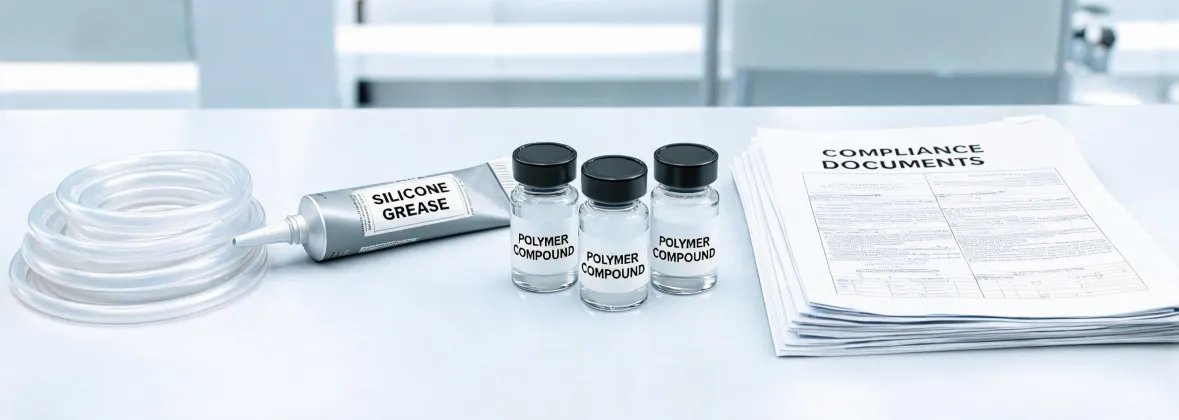
The cause? I specified the wrong lubricant for the assembly process—a standard Shin-Etsu silicone grease that reacted with their specific polymer housing. The redo cost us $1,700 in materials and shipping, plus a two-week delay and a bruised client relationship. I still wince thinking about it.
Here's the thing: I thought 'silicone grease' was a commodity. It couldn't be more wrong.
The Real Problem Isn't 'Choosing a Grease'
When most people ask about silicone grease, they want to know the price. Or the consistency. Or maybe the temperature range. Those are surface-level questions.
The deep question no one asks—the one that bit me—is: Is this specific grease chemically compatible with the materials it will contact?
See, Shin-Etsu makes dozens of silicone grease formulations. Some are designed for high-temperature environments. Some for low-outgassing in sealed electronics. Some are optimized for plastic compatibility. They are not interchangeable.
I didn't know that. I ordered what we always used—a general-purpose Shin-Etsu silicone grease—and assumed it would work. It didn't.
What I Missed: The Polymer Compatibility Factor
The specific issue was a phenomenon called 'plasticizer migration' and 'solvent swelling.' The silicone oil in the grease was slightly absorbed by the client's thermoplastic compound. Over three weeks, it caused the gasket material to expand by about 4%. That doesn't sound like much, but on a precision assembly, 4% is a catastrophic failure.
In my first year handling these orders (2017), I made the classic error: assuming 'silicone' meant 'safe for everything.' After 47 orders tracked in our system (yes, I keep a log now), I can tell you that about 8% of compatibility issues result in measurable material degradation within a month. My mistake was in that unlucky minority.
The surprise wasn't that the grease caused a problem—it's that the problem was invisible for three weeks. No immediate gassing, no visible cracking. Just a slow, quiet failure.
The Real Cost of Getting It Wrong
Whether you're using a Shin-Etsu silicone grease for assembling medical device molds or a polyurethane sealant for automotive parts, the cost of incompatibility doesn't end with the redo. Here's what my spreadsheet shows from the last five years:
- Direct cost: $1,700 for re-manufacturing and rush shipping.
- Hidden cost: 2 weeks of delayed project timeline. The client's production line was down for 4 days.
- Relationship cost: A 20% discount on the next order to keep the account.
- Process cost: 12 hours of cross-team meetings to figure out what went wrong and how to prevent it.
Total estimated cost of that single specification error? Somewhere around $5,000—not including the embarrassment. I should have tracked that more carefully. What I can say anecdotally is that the first mistake is usually the cheapest, because after that you change your process.
How We Fixed It (A 5-Minute Process That Prevents $5,000 Errors)
After that September 2022 incident, I created a simple pre-order checklist. It now lives on a whiteboard in our engineering bay. It's not complicated. It's just the discipline of asking four questions before ordering any silicone grease for a client assembly:
- What materials will this grease contact? Get the exact polymer or metal spec from the client. Don't assume.
- Is there a known compatibility chart? Shin-Etsu publishes technical data sheets. Wacker does too. Read them. (Should mention: not all vendors are transparent about this—Shin-Etsu is better than most.)
- What is the operating temperature range? Some greases work at -40°C. Some degrade at 100°C. Check the actual environment.
- Is this for a sealed or open system? Volatile compounds in some greases can outgas in sealed electronics, causing fogging or corrosion.
The list saved us about $1,200 in potential rework in the first six months after we posted it. We've caught 22 potential mismatches using it in the past 18 months. Five of those would have been outright failures. Simple.
I'm not saying I never make mistakes anymore. I still forgot to check the curing temp on a batch of silicone mold materials in Q1 2024—cost us $400 and a day of production. But I don't make the grease compatibility error anymore. That lesson stuck.
If you're working with silicone greases for your assemblies—Shin-Etsu or otherwise—take ten minutes to check material compatibility. It takes 5 minutes of verification. I promise you it beats 5 days of correction.
Note on sources: General pricing data based on quotes from major online printing vendors, January 2025. Material compatibility data referenced from Shin-Etsu Silicones of America technical literature. Verify current specification data sheets for your specific application.