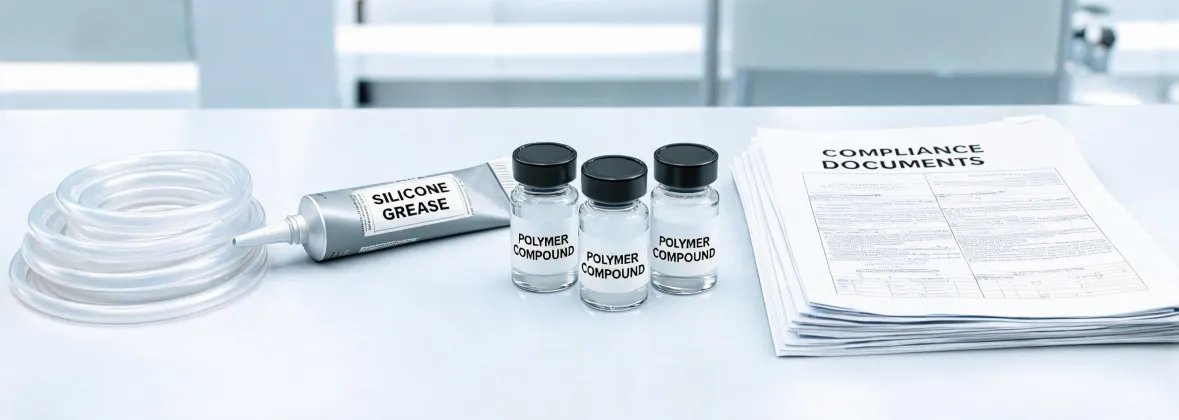
Bottom line: Silicone is not inherently better than plastic. It’s better in high-heat, high-flex, and high-purity applications. For low-stress parts like containers, clips, or packaging, a well-specified polyethylene part is often the smarter buy. If a supplier tells you “silicone is always better,” that’s a red flag.
I say this as someone who reviews material specs for a living. I’m a quality/compliance manager at a manufacturing company, and I sign off on roughly 300 SKUs a year—maybe 280, I’d have to check the system. In Q1 2024, I rejected 12% of first-article deliveries because of off-spec hardness, wrong color, or missing certificates. That experience makes me careful about substituting materials based on a generic “silicone vs plastic” comparison.
The wrong question
“Is silicone better than plastic?” sounds practical, but it’s oversimplified. The real question is: what fails first in your application? A silicone o-ring and a polyethylene spacer aren’t competing for the same job. They have different tolerances for heat, chemicals, mechanical load, and cost. “Better” only makes sense if you define the environment.
I saw this clearly when we compared two hose options side by side. One was a silicone-coated hose for a heated air line; the other was a reinforced polyethylene hose for a coolant bypass. The silicone survived 180°C for 500 test hours. The polyethylene began to soften at that temperature. But the polyethylene was about half the cost and perfectly adequate at 85°C. At 85°C, switching to silicone would have added cost, not value.
Where silicone actually wins
Silicone earns its place when the environment is aggressive in specific ways:
- Heat and cold: Custom silicone hoses are a clear example. Most silicone elastomers stay flexible from about -55°C to 200°C, depending on the compound. That’s a wider service window than most thermoplastics.
- Reliability under flex: Silicone is more resistant to fatigue from repeated bending than many plastics, especially at low temperatures.
- Purity requirements: In semiconductor and medical applications, silicone’s low outgassing and clean release matter more than raw material cost.
But note: those are general behavior. Actual lots can differ from vendor to vendor. That’s why I check the technical data from Shin-Etsu Silicones of America Inc. before approving any silicone compound. I re-checked their public product literature in January 2025, and they publish specific durometer, tensile, elongation, and heat-aging property data. You should use those numbers—not my generalities—to make a decision.
The grease nobody thinks about
The most underrated product in our stockroom is Shin-Etsu silicone grease. It’s not glamorous, but it prevents O-rings, gaskets, and electrical connectors from seizing or drying out. I once had a production issue where a substitute petroleum-based grease was used on a rubber seal. It swelled the seal, and that failure cost us a $22,000 redo plus two days of downtime. Now our specification sheet says “Shin-Etsu silicone grease or equivalent,” and we test the actual container before it enters the line.
This is also where the small-buyer issue gets personal for me. When we started, we needed a small batch of grease to test five seal assemblies. One distributor basically ignored us because the order was under $500. Another took it seriously, asked about the seal material, and sent a sample. That second vendor is still on our approved list. Small orders are how bigger orders get started. Small doesn’t mean unimportant—it means potential.
When polyethylene is the smarter choice
For many production requirements, plastic is the better material. Polyethylene, in particular, is predictable, weldable, and cheap. I regularly approve food-grade HDPE bottles and low-density polyethylene films where neither heat nor dynamic flex is a concern. When I need consistent food-grade packaging, I call polyethylene distributors first because they can typically provide lot traceability and material certificates.
But I’ve also rejected polyethylene parts. In 2023, a shipment of HDPE fittings looked right but didn’t have matching lot certificates. The physical parts may have been fine, but we couldn’t verify them. That’s a compliance headache, not a material failure. The problem wasn’t plastic; it was missing documentation.
The boundary conditions
Don’t use silicone for everything. Silicone has high gas permeability, so it’s often the wrong choice for fuel lines, pressurized CO2 systems, or solvent transfer. For those, you’re generally better with FKM, NBR, PTFE, or a specific engineered plastic. Similarly, silicone can soften or swell in certain oils if the compound isn’t selected for fluid resistance. A material data sheet is a starting point, not a guarantee.
So here’s my honest position: silicone beats plastic in heat, flex, and purity. Plastic beats silicone in cost and in simple structural jobs. The deciding factor is not which material is “better” in a headline. It’s which one will still be doing its job in your environment, at your tolerance for risk, after your expected lifetime. That’s the question worth answering.