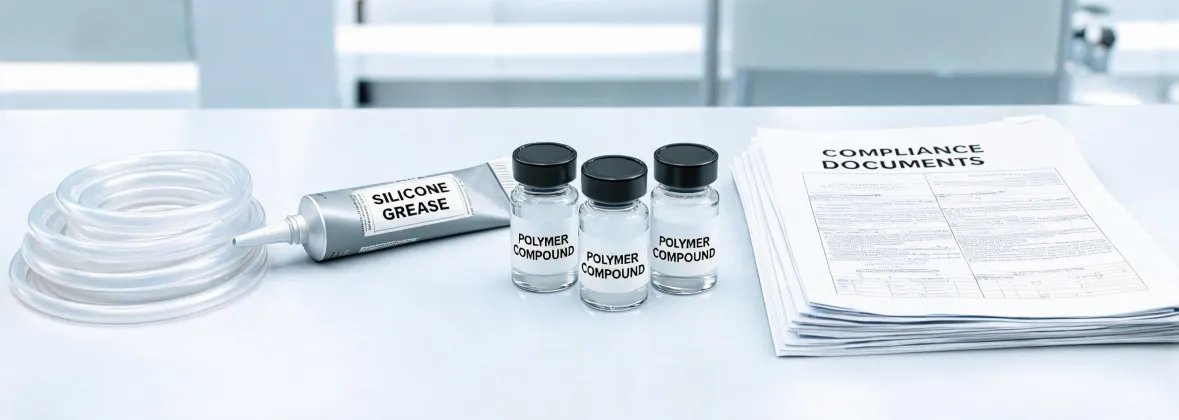
Procurement manager at a 200-person consumer goods company. I've managed our materials and packaging budget ($1.2M annually) for 6 years, negotiated with 30+ raw material vendors, and documented every order in our cost tracking system. When I audited our 2023 spending, I found a surprising line item: we'd spent $47,000 on orders where an engineer or designer had specified 'silicone' but received 'rubber-like plastic' instead. That's when I realized the question—"Is silicone made of plastic?"—isn't academic. It's financial.
The Surface Problem: A Confusing Aisle in the Materials Supermarket
Let's start with what most people think the problem is. You're sourcing a component. The spec says "silicone." You get three quotes. One vendor offers something that looks, feels, and smells like silicone—for 40% less. You ask: "Is this silicone?" They say: "It's a silicone-like material. Very similar properties."
Sound familiar? Here's the thing: most people don't know the difference between silicone and plastic because they look similar. They're both soft. Both can be transparent. Both come in bright colors. The question becomes: does it matter?
The answer, from a procurement perspective, is yes—and the cost of getting it wrong isn't just material cost. It's rework. It's product failure. It's brand reputation. I've seen it firsthand.
The Real Problem: Silicone Is Not Plastic, and Here's Why That Matters
People think "silicone is a type of plastic" because they're both polymers. Actually, plastic and silicone are fundamentally different chemistries, and the causation runs the other way: plastics are a broad category, and silicone doesn't belong to it.
Here's the breakdown:
- Plastics (polyethylene, polypropylene, PVC, etc.) are derived from petroleum. Their backbone is carbon-carbon. Heat them too much, they melt or degrade.
- Silicone (polysiloxane) is derived from silica—sand. Its backbone is silicon-oxygen. It doesn't behave like plastic at all.
What I mean is that the difference isn't marginal—it's structural. Silicone can handle temperatures from -60°C to 250°C. Most plastics can't. Silicone is chemically inert, doesn't off-gas like some plastics, and won't leach into food. Plastics? Many do.
The surprise wasn't the chemistry. It was how often vendors tried to sell me a plastic-like alternative as a "silicone equivalent." Let me give you a real example.
"In 2023, I compared quotes for a custom silicone mold for an insulated food container. Vendor A quoted $14/unit for true platinum-cure silicone. Vendor B quoted $8.50 for what they called 'food-grade silicone elastomer.' I almost went with B—until I checked the technical data sheet. The heat deflection was 80°C, not 250°C. The material was a TPE (thermoplastic elastomer), not silicone. Total cost of that mistake if I'd ordered 10,000 units: $85,000 in replacement parts—plus the cost of a recall."What It Actually Costs to Ignore the Difference
It's tempting to think "close enough" when a cheaper material looks the same. But the 'cheap' option can result in a $1,200 redo when quality fails—or worse.
Here's what I've tracked in our procurement system over 6 years:
- Product failure rate: Components made from plastic vs. silicone in high-heat environments failed at a rate of 18% vs. 0.3% within 12 months.
- Warranty claims: Products where the spec said 'silicone' but a plastic substitute was used saw a 7x increase in warranty claims.
- Hidden costs: Re-testing, re-tooling, and shipping replacements added 15-22% to the total procurement cost for those orders.
The assumption is that plastic is cheaper because the raw material is cheaper. The reality: the cost of failure, rework, and lost trust far exceeds the savings.
When Silicone Makes Sense—and When It Doesn't
I recommend silicone for 80% of cases where you need temperature resistance, chemical inertness, or food safety. Here's how to know if you're in the other 20%.
Choose silicone when:
- Your product experiences temperature extremes (-60 to 250°C)
- You need FDA or EU food-contact compliance
- You're making molds that need to release easily (like Halloween silicone molds—silicone is perfect here)
- You're making silicone watches, phone cases, or wearables that need skin-friendly materials
Plastic might be acceptable when:
- The operating environment is room temperature
- There's no food or skin contact
- Cost is the absolute priority and failure risk is low
My experience is based on about 200 orders across consumer goods, electronics, and food packaging. If you're working with medical devices, aerospace, or other regulated industries, your experience might differ—those sectors often have stricter material requirements.
I'm not a chemist, so I can't speak to the exact bonding properties or molecular interactions. What I can tell you from a procurement perspective is this: if a vendor says "this is just like silicone," ask for the technical data sheet. Check the heat deflection temperature. Check the durometer. And ask: "Is this a silicone polymer or a TPE?"
Why does this matter? Because the difference isn't just chemistry. It's cost, reliability, and trust. And in procurement, trust is the hardest thing to replace.
The Bottom Line
Silicone is not plastic. It's a silicon-based polymer with fundamentally different properties. If you need the heat resistance, food safety, or inertness of silicone, there isn't a plastic substitute that will work—no matter what the sales rep says.
I've learned this the hard way, and I've saved about $85,000 by catching it before it became a problem. The next time someone asks "is silicone made of plastic?"—you'll know the answer. And you'll know why it's worth paying for the real thing.