September 2022. I was standing in our warehouse, staring at 800 placemats that were all the wrong material. On my phone, two messages waited: one from the client asking for samples, one from my bank about the $3,200 invoice. I said something unprofessional.
Here's the thing: I'd been ordering materials for six years. I thought I knew enough about polymers to make a quick call. I didn't.
How a $3,200 placemat order went wrong
The order looked easy. A restaurant chain wanted 800 custom silicone placemats, 18x12 inches, food-grade, heat-resistant, with their logo in a specific Pantone blue. The spec sheet read:
Material: silicone. Size: 18″ x 12″. Color: Pantone 286C. Must be food-grade and heat-resistant.
Our supplier quoted two options: TPU and silicone. The TPU option was about 30% cheaper. I told myself these were both soft, flexible, food-contact materials, so what could go wrong? The numbers said save the client money. My gut said, why is this cheaper? I told my gut to be quiet.
I assumed TPU was basically a type of silicone. Maybe a tougher version? A more cost-effective cousin? Nope. That assumption became mistake number one.
The first red flags
The pallets arrived on time. The boxes were labeled “800 pcs TPU.” I had two choices: read the label and stop, or open the box. I opened the box.
The first red flag was the smell. They smelled like a shower curtain aisle, not the neutral, slightly rubbery smell I associate with silicone bakeware. The surface was also tackier than the sample we had approved. Then I noticed the color: the blue looked dull, not the deep saturated Pantone blue we'd signed off on.
I rationalized every one of those signals. “Probably packaging odor.” “Maybe the finish changed.” “The lighting in the warehouse is bad.” I ignored all of it. That was mistake number two.
The solvent test that exposed everything
Our printer asked what he should use to clean the placemats before printing the logos. I said “silicone solvent,” the standard cleaner we keep for silicone surfaces. He wet a cloth, wiped a corner, and the surface immediately started to smear.
Then it peeled.
TPU is not resistant to silicone solvent. Silicone is. Thirty seconds of a simple compatibility test confirmed what I didn't want to admit: we had 800 non-silicone placemats and a client expecting silicone.
The test literally saved us from ruining all 800 mats in production. But the order was still wrong, and the panic was real.
The communication failure
Here's what I learned about vendor conversations: you can use the same words and mean completely different things.
I said “placemat material.” The vendor heard “anything flexible.” They gave me a quote with two options: TPU and silicone. I picked TPU because it was cheaper. They saw that as approval to ship TPU. I saw it as a material substitution. Neither of us asked the other to clarify.
If I had written “silicone rubber, MQ class, food-grade” on the PO, or asked them to confirm that TPU is a type of silicone, the whole disaster would have been caught before cutting any material. But I didn't. And they didn't volunteer.
Rescue by Shin-Etsu
After a very uncomfortable afternoon, I started searching for the right material. I typed “shin-etsu silicone news” into the search bar, mostly to see what the industry was saying about food-contact silicone. That search led me to technical data sheets, industry announcements, and application guides for liquid silicone rubber grades.
Shin-Etsu, I learned, is not just a materials supplier. They make silicone in every form you can imagine: gum, resin, liquid rubber, grease, and raw material for consumer products. I found a local distributor, explained my problem, and a technical rep asked two questions I couldn't answer: What durometer do you need? and what food-contact standard do you have to meet?
I didn't know either one. They sent samples anyway.
The moment I held the Shin-Etsu food-grade silicone sample, the difference was obvious. It smelled like silicone. It had the proper dry, grippy surface. A wipe with the silicone solvent did absolutely nothing to it. And the color — it matched Pantone 286C within the expected Delta E tolerance, not a “close enough” match. We placed a new material order, paid rush fees, and re-ran production in five days. The client got their placemats on Friday afternoon, barely beating the deadline.
The technical difference nobody explained to me
Let me put it plainly: TPU is not silicone.
TPU, or thermoplastic polyurethane, is a tough, abrasion-resistant thermoplastic. It's commonly used in phone cases, shoe soles, and industrial parts where durability matters. But it's not heat-resistant in the same way silicone is, and it's not resistant to many solvents.
Silicone rubber, on the other hand, is a silicon-oxygen polymer with crosslinks that make it a thermoset. It can tolerate extreme temperatures, stays flexible when cold, and is generally resistant to cleaning solvents. Food-grade silicone placemats are typically made to comply with standards like FDA 21 CFR 177.2600 or EU 1935/2004. TPU doesn't automatically meet those standards, even if it looks similar.
If you're specifying a silicone product, ask for the material family by name. If someone offers you “similar rubbery material,” ask for a data sheet. Ask for a sample. Ask, “is TPU silicone?” It's not.
The Honda Shin-Etsu connection
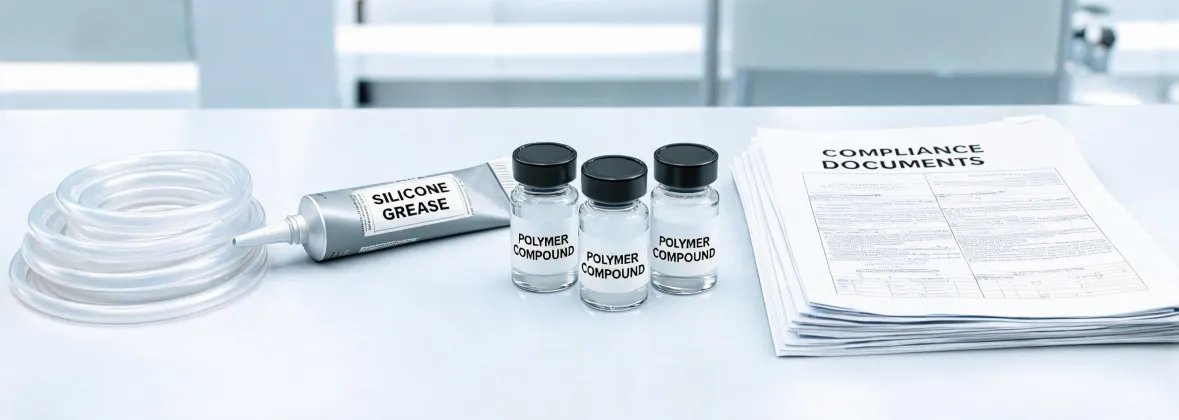
While the rush order was in production, something clicked in my memory. I had a tube of Honda Shin-Etsu silicone grease in my garage. It's the grease car enthusiasts use on door seals to stop them from sticking and squeaking. I'd been using it for years without thinking about the manufacturer.
Same company. Same kind of polymer expertise.
That tube of grease had proven itself to me in freezing winters. The same company made the food-grade silicone that saved my placemat order. Consistency like that isn't an accident. It's what happens when a company owns the whole silicone chain, from raw monomer to finished polymer.
The checklist that pays for itself
I'm not pretending I became a materials expert overnight. But I did build a verification routine that makes me look a lot smarter than I am.
Every order for a soft, flexible material now gets the same three checks:
- Material family written explicitly on the PO: silicone rubber, not TPU, not PVC, not TPE.
- A sample approval step. I hold it, bend it, smell it, wipe a corner with silicone solvent, and test heat resistance before any production run.
- A substitution rule for the vendor: if you plan to replace the specified material, you must confirm in writing and wait for approval.
That checklist takes fifteen minutes per order. In the past 18 months, it has caught 47 potential issues. Two of them were TPU substitutions on products the client had specifically called silicone. Without the checklist, those would have been two more $3,200 disasters.
Bottom line
Look, I'm not saying budget options are always wrong. TPU is a great material for a lot of applications. It's tough, recyclable, and yes, cheaper. But it is not silicone.
Five minutes of verification beats five days of correction. A twenty-cent swatch test beats a $3,200 mistake. And a few extra questions on a PO beats a phone call where you have to explain why the client's placemats are melting under the warehouse lights.
Prevention is cheaper than cure. Every time.