-
What exactly is Shin-Etsu silicone?
-
Is 'Shin-Etsu Silicones of America' the same as 'Shin-Etsu'?
-
How do I find an authorized Shin-Etsu silicone distributor?
-
What are silicone gels, and when do I need them?
-
What is a silicone ladle, and why would a buyer ask about it?
-
Silicone vs polyurethane: how do I choose?
-
Should I consolidate all silicone orders with one distributor?
-
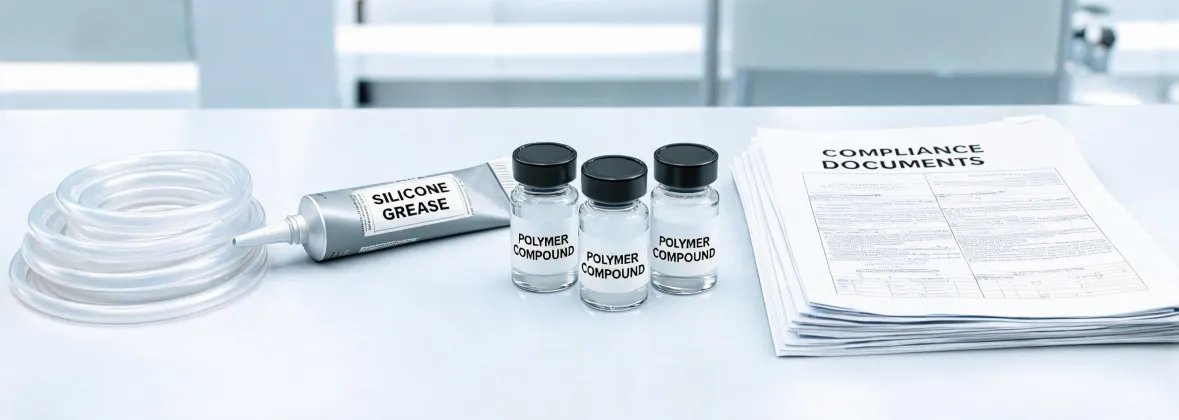
What paperwork should I request before starting a silicone order?
I manage purchasing for a mid-sized manufacturer, which means I process about 60 to 80 orders a year across 8 or so suppliers. My job is to get materials in the door without sending operations into a holding pattern or making finance sweat. When I took over purchasing in 2020, I assumed buying silicone materials was basically buying one kind of rubber. It took less than a year to learn that 'silicone' is a category, not a spec.
What exactly is Shin-Etsu silicone?
Shin-Etsu Chemical is one of the world's largest silicone polymer producers. In the American market, the business unit is Shin-Etsu Silicones of America. That is the US affiliate, and it is the name I search for when I need product data sheets or compliance documents. If you type 'shin etsu silicones of america' into a search engine, it should take you to the official regional resources instead of a wall of generic distributor pages.
The product line is broader than most non-chemists expect. Shin-Etsu supplies raw silicone rubber, liquid silicone rubber, silicone bases, silicone oils, silicone gels, and specialty modifiers. As a buyer, that matters because 'Shin-Etsu' is a brand — not a single material. The right grade for a mold release is not automatically the right grade for a food-contact silicone ladle.
Is 'Shin-Etsu Silicones of America' the same as 'Shin-Etsu'?
Yes, for the US market. But that does not mean every order goes directly to the company. In practice, smaller and mid-sized buyers order through distributors who stock, package, and sometimes modify the material before it reaches the plant. The manufacturer owns the chemistry; the distributor owns the service, lot traceability, and invoice. Both matter.
I got that backward at first. I assumed buying through someone who listed 'Shin-Etsu' online meant the material would be identical no matter which warehouse it came from. Then a supplier swapped the grade based on their own system, and production lost half a day because the shore hardness was wrong. The brand was real. The execution was not.
How do I find an authorized Shin-Etsu silicone distributor?
Searching for 'shin-etsu silicone distributors' gives you a list, but not every result is authorized. My rule now is simple: ask for proof. An authorized distributor should be able to provide a letter from the manufacturer or appear on the manufacturer's distributor locator. If you get a shrug, move on. Also ask for the exact product code in writing. A distributor who writes 'Shin-Etsu equivalent' is a red flag.
I also watch how a distributor responds to a quote request. A person who asks what you're molding, what temperature range the part sees, or whether you need food-contact compliance is showing you they actually handle these materials. A person who just sends a price without any questions is a less safe fit. For a shop processing 60 to 80 orders a year, one bad batch is way more expensive than one extra phone call.
What are silicone gels, and when do I need them?
Silicone gels are soft, cured silicone materials with a sticky, gelatin-like feel. They are not rubber bellows or gaskets. They are usually supplied as two-part liquid kits and used for potting electronics, damping vibration, protecting semiconductors, and conforming to curved surfaces in medical or consumer devices.
The buying mistake is treating them like a runny rubber. Silicone gels are defined by viscosity, gel time, cured softness, and sometimes outgassing limits. A Shore 00 hardness or penetration number is more useful than Shore A. If you are potting a circuit board, you also need to know if the gel expands after cure or changes with temperature. You cannot substitute a general silicone rubber just because the label says silicone. I ask for the exact technical data sheet and a small batch sample before ordering a drum.
Gel failure modes are also different. A rubber part that is too hard or too soft is obvious. A gel that hasn't cured, or outgasses, may not show up until the final device fails in the field. That's why buying from a distributor who understands the application matters as much as the product code.
What is a silicone ladle, and why would a buyer ask about it?
A silicone ladle is a kitchen and foodservice tool, usually a heat-resistant silicone head on a metal handle. It shows up in industrial buying because commercial kitchens, restaurant suppliers, and consumer goods companies buy them in volume. For a buyer, the interesting part is not the shape; it's the material compliance.
The term 'silicone ladle' in B2B searches often points to foodservice supply, not a foundry ladle. I mention that because I have seen buyers filter for the wrong applications. The material is the same silicone family, but the specification, temperature rating, and compliance path are completely different.
A silicone ladle needs to be food-contact safe, heat-resistant enough for hot soup or sauce, and robust enough for a commercial dishwasher. The questions I ask now are simple: What is the temperature rating? Does the material meet FDA food-contact requirements? Is there lot traceability back to the compound? Those answers separate a household gadget from something you can sell to a restaurant chain.
I had to order a few hundred ladles for a customer a while back. The supplier said 'food safe silicone' without much detail, and I accepted it because they had a good price and fast delivery. I knew I should have asked for the compliance letter first. The product was fine, but the paperwork was a mess to pull together later. Now I treat the documentation as part of the order, not an afterthought.
Silicone vs polyurethane: how do I choose?
I use a blunt rule: silicone when the part needs to handle high heat, stay soft, or contact food; polyurethane when the part needs to resist abrasion, tearing, or oil. Silicone can withstand temperatures far beyond most flexible polymers, but its tear strength can be disappointing in thin cross sections. Polyurethane is often tougher, but it can soften or degrade in the wrong heat or chemical environment.
I learned this through a bad call in 2021. I approved a 'silicone gasket' that was priced noticeably lower than the material we had been using. It turned out to be a polyurethane compound — not necessarily a bad material, but wrong for the heat and moisture in that washdown area. The gaskets swelled, failed, and got replaced. The original 'savings' disappeared once I added the labor and expediting.
To be fair, silicone vs polyurethane is not a simple good-versus-bad question. Thermoplastic polyurethane can often be injection molded, while silicone may require liquid silicone molding or compression molding. That changes tooling costs, cycle times, and minimum order quantities. A polyurethane diaphragm can outperform silicone in a high-wear pump; a silicone seal can outperform polyurethane in a hot oven. The spec has to decide.
Should I consolidate all silicone orders with one distributor?
In 2024, our company consolidated vendors to cut accounting overhead. At first I wanted to push all silicone materials onto one authorized distributor. It worked for commodity items like silicone oil and grease, but not for specialty silicone gels or custom-fabricated parts. The rule I landed on: use a master distributor for commodities and a separate specialist for materials with strict process requirements. Consolidation saves time, but it doesn't help if it forces a compromise on material performance.
In my experience, the right number of suppliers is usually less than you think but more than one. One vendor who can talk to an engineer about viscosity curves might not be the same vendor who can source a food-grade silicone ladle at the right price.
What paperwork should I request before starting a silicone order?
Before I place a silicone order, I want more than a quote. The checklist includes:
- Manufacturer's technical data sheet for the exact grade
- Certificate of analysis or lot certificate from the supplier
- A compliance letter if the material is claimed as food-contact or medical-grade
- Safety data sheet (SDS) for handling and storage
If a supplier says 'it's food grade' or 'it's medical grade,' that claim should be substantiated. Per FTC guidelines (ftc.gov), advertising claims have to be truthful and backed by evidence. In purchasing, the proof is the document. I didn't always ask for it. After chasing a compliance letter for two weeks in 2022, I now ask before the purchase order goes out, not after the customer asks.