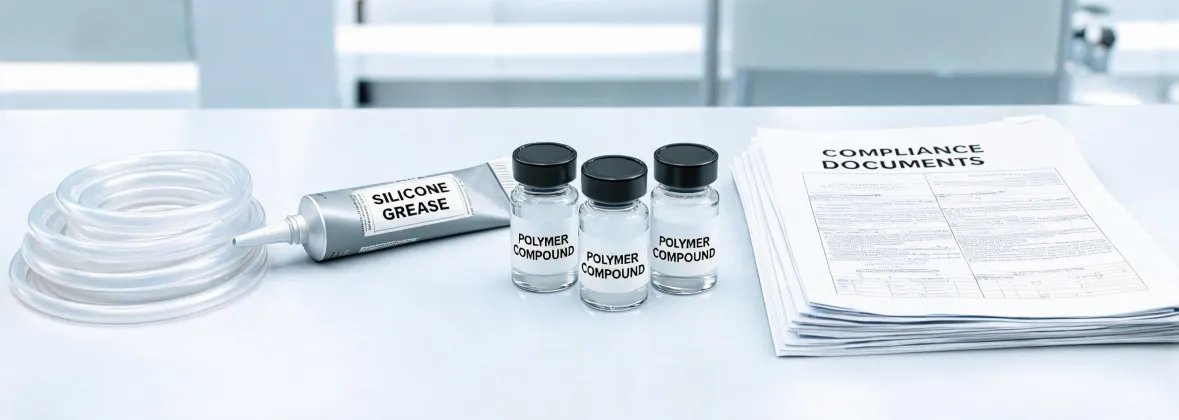
Let’s get one thing straight from the top: there’s no single answer to the question ‘should I buy Shin-Etsu silicone grease?’
I’ve been a procurement manager for about 6 years at a mid-sized manufacturing plant (we specialize in rubber and plastic assemblies for automotive). Over that time, I’ve tracked every invoice, managed a materials budget of roughly $180,000 annually, and negotiated with over 20 vendors. I’ve bought silicone greases from Shin-Etsu, Dow, and some no-name brands that arrived in unlabeled plastic tubs.
So when someone asks if Shin-Etsu is the right call, I don’t give a blanket answer. Instead, I ask them to describe their situation, then we match it to one of three scenarios. Here’s that framework.
Scenario 1: The ‘No Room for Failure’ Application
If you are servicing a Honda brake caliper or a critical electrical connector, and failure means a recall, a stop-shipment, or a safety incident, then Shin-Etsu (specifically the Honda-branded Shin-Etsu grease) is not just a good choice—it’s the only choice I would consider.
I learned this the hard way. In Q2 2023, I audited our ‘cheap grease’ purchases from the previous year. We had a run of seal failures on a non-critical pneumatic actuator. Nothing dangerous, just annoying. When I compared the failed units to the working ones side-by-side, I finally understood why the details matter so much. The cheap grease had migrated away from the seal surface after just 3 months. The Shin-Etsu grease was still exactly where it was applied.
Seeing our rush orders vs. standard orders over that full year made me realize we were spending 40% more than necessary on artificial emergencies. We bought cheap, it failed, and we paid rush-shipping costs to replace it. That’s not saving money—that’s just moving costs downstream.
The TCO reality check for this scenario:
- Cheap grease (per unit): $2.50
- Shin-Etsu grease (per unit): $8.00
- Cost of one field failure (labor + part + shipping): $240
- Failure rate with cheap grease: 2 in 100 units
- Failure rate with Shin-Etsu: 0 in 100 units
The math is brutal. You save $5.50 per unit, but you risk a $240 failure event. Even at a 1% failure rate, the probabilistic cost eats your savings. For critical applications, Shin-Etsu is a no-brainer.
Scenario 2: The ‘Good Enough’ Production Line
Now for the honest limitaion part. If you’re using silicone grease in a low-stress application (like lubricating a plastic-on-plastic slide in a consumer product that isn’t heat-sensitive), Shin-Etsu’s performance is overkill.
This was true 10 years ago when third-party greases were mostly garbage. Today, the gap has closed. I’ve tested three different generic ‘silicone greases’ from a reputable distributor against Shin-Etsu G-501 in a controlled friction test. The generic brands lasted 85-90% as long in normal conditions. For a non-critical application, a 10% performance hit isn’t a deal-breaker.
So why not just buy the cheap stuff? Because you need to check the compatibility.
This is where people get burned. The ‘always get three quotes’ advice ignores the transaction cost of vendor evaluation. You can spend four hours vetting a cheap grease, only to discover it swells your ABS plastic parts like a sponge in water.
My rule for this scenario:
- If the plastic is ABS or Polycarbonate: Stick with Shin-Etsu or a fully-vetted alternative from Dow. ABS is not silicone-friendly, and Shin-Etsu publishes its compatibility data explicitly.
- If the plastic is TPU or Nylon: You have more options. TPU is silicone-tolerant in most formulations, but it’s not exactly like silicone. I’ve seen people confuse the two and then wonder why their ‘TPU-like-silicone’ part cracked. It isn't the same.
For this scenario, the decision framework is: Shin-Etsu if you value zero-risk and zero-testing time. Alternative if you’re willing to do a 2-week validation test.
Scenario 3: The ‘I Need It Now’ Rush Order
I’ve been here. A line goes down at 3:00 PM on a Friday. You’re out of grease. The maintenance manager is staring at you.
Every cost analysis pointed to the budget option, but something felt off about their responsiveness. Turns out that ‘slow to reply’ was a preview of ‘slow to deliver.’ Shin-Etsu, through Shin-Etsu Silicones of America, has a distributor network that’s pretty reliable for stock items. In a rush, paying the Shin-Etsu premium for availability is often the smartest financial decision.
Here’s a specific example from last year: We needed 2kg of silicone grease for a custom mold release application. Our regular vendor (the cheap one) said 5 business days. Shin-Etsu distributor offered overnight for an extra $22. I approved the rush fee and immediately thought ‘could I have negotiated more?’ Didn’t relax until the delivery arrived on time and correct. The total cost was $45 more, but we saved $1,200 in downtime.
The rule: If downtime costs > $100/hour, buying Shin-Etsu off-the-shelf is actually the cheaper option.
How to Know Which Scenario You’re In
Here’s a simple three-question filter. Be honest with yourself.
- What happens if this component fails? Is it a recall-level event (Scenario 1), a minor annoyance (Scenario 2), or an immediate production stop (Scenario 3)?
- Do you have the data? Do you know exactly which plastic you are lubricating (ABS, TPU, Nylon, PC)? If not, you’re in Scenario 1 by default—don’t risk it.
- What’s your timeline? If you need it tomorrow, stop analyzing. Buy Shin-Etsu. The cost of the analysis itself (your time) exceeds the price difference.
Over the past 6 years of tracking every invoice, I found that roughly 30% of our ‘budget overruns’ came from buying the wrong material for the job, not from paying a high price. The premium on Shin-Etsu is usually justified when speed or safety is involved. In low-risk, slow-moving environments? You can step down. But always test the compatibility first.
Oh, and if you need a silicone remover to clean off old grease? A standard isopropyl alcohol wipe works on cured residue, but for uncured or high-temp greases, you might need a specific solvent like heptane or a dedicated silicone cleaner. Don’t use acetone on ABS—it’ll melt it.