Paying less upfront is often the most expensive decision you can make. That isn't a slogan. It's the conclusion I reached after eight years of tracking MRO spending for a 300-person electronics manufacturer.
I'm a procurement manager by title and a cost controller by instinct. I manage about $450,000 a year in maintenance, repair, and operations supplies. I have a cost tracking system, a supplier comparison spreadsheet, and a stubborn memory for bad decisions. So when I say Shin-Etsu silicone grease is worth the price, I'm not repeating a manufacturer pitch. I'm reading my own audit notes.
Prevention is cheaper than correction. Every time I've violated that rule, I've paid for it in rework.
Here's the thing: I haven't always bought Shin-Etsu. I used to buy whatever white silicone grease was on sale. It looked the same. It smelled the same. It cost less. Then I looked at the reject rate.
The Cost Lesson That Changed My Spreadsheets
In 2023, we had an assembly line with a 9% reject rate. The failure mode was noisy plastic gears and intermittent sticking in a small electromechanical actuator. My first assumption was mechanical design. The gears weren't the problem. The lubricant was.
Everything I'd read about grease said a lubricant is a lubricant: viscosity, temperature range, cost. In practice, I found the opposite. The generic white silicone grease we were using had a habit of bleeding oil and leaving a tacky residue. After six weeks of thermal cycling, it stopped lubricating. Not ideal. Not catastrophic. Expensive.
Honestly, I'm not sure why the generic grease failed so consistently. My best guess is the thickener system wasn't stable over repeated thermal cycles. What I know for sure is that it stopped lubricating. The total cost formula is simple: unit price, rejects, downtime, rework. In that order.
When I audited our 2023 cost tracking system, the math was ugly: 412 reworked actuators, roughly $11,000 in direct labor and replacement parts, plus the shipping cost of expedited replacements to customers. The grease had saved us about $0.80 per unit on the purchase order. It cost us about $27 per rejection. That's the kind of trade you don't notice until you build the spreadsheet.
Shin-Etsu Silicone Grease: The White Silicone That Earned Its Tube
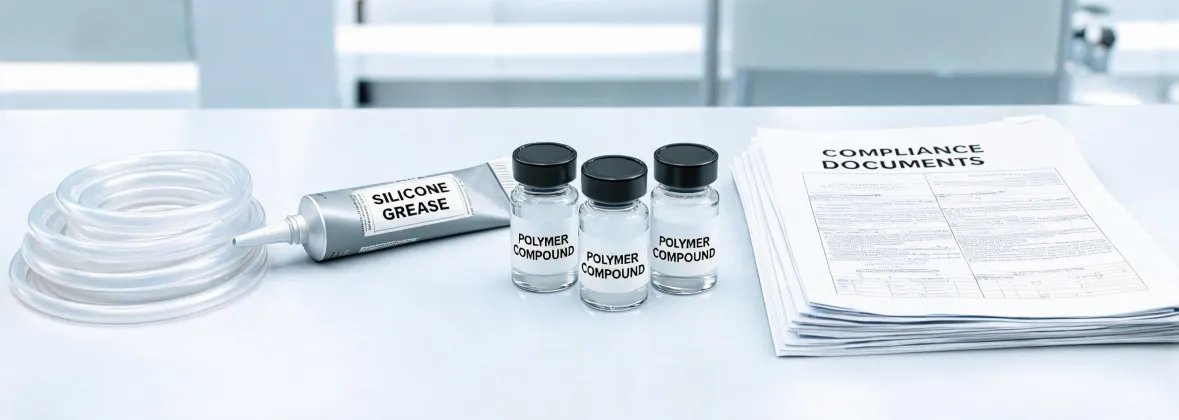
The replacement was a tube of Shin-Etsu silicone grease—the white, semi-transparent paste that the OEM had specified in the design manual all along. I had substituted a cheaper alternative because, on paper, it matched the key specs. I was wrong.
The raw data said the substitute was 30% cheaper. My gut said the OEM had a reason for the spec. I overruled my own spreadsheet and went with the Shin-Etsu grease. That might sound unscientific. It was the best procurement decision I've made in years.
When I compared our line-side reject data before and after the switch, I finally understood why the OEM called out Shin-Etsu. The grease film lasted longer. It didn't migrate the way the generic version did. It didn't leave that sticky oxidation residue. In 30 days, the reject rate went from 9% to 1.8%. We didn't change a single machine setting.
I should be clear: I'm not saying the name alone fixed the problem. I'm saying the consistency, the surface compatibility, and the thermal stability of that particular silicone grease made the difference. The white silicone grease from Shin-Etsu was engineered as a matched material, not a generic filler.
You'll also see it spelled 'shin etsu' on some invoices and spec sheets. I've typed it that way myself. Same company, same Shin-Etsu Chemical product family.
Between you and me, I still wince at the unit price. The premium added roughly $3,200 to our annual lubricant spend. But the rework savings in the next quarter alone were $12,700. After seeing those numbers, standardizing on Shin-Etsu became a no-brainer. Bottom line: the more expensive tube was the cheaper purchase.
Silicone Foam: The Gasket Material That Pays You Back
The same logic applies to silicone foam, though I got there the hard way. We seal battery housings and control enclosures with gaskets cut from silicone foam. A cheaper foam alternative appeared structurally identical: same density, same color, same pressure-sensitive adhesive backing. The first batch passed incoming inspection. Six months later, it failed in the field.
When we pulled the gaskets from returned units, they were crushed. The compressed cells weren't recovering. The cheap foam had soaked up moisture, softened, and taken a permanent set. Our field failure rate due to water ingress jumped from about 3% to 7% over a nine-month period.
The replacement gasket material was made from Shin-Etsu silicone foam stock. It cost 22% more per sheet. It also brought the field failure rate back down to around 3.4% in the next two quarterly reviews. Not perfect, but a massive improvement. The cost calculator I built after that incident now has a line item called 'compression set risk.' That number has more influence on our gasket purchasing than the sticker price.
Look, I'm not saying every Shin-Etsu product is automatically the right answer. I'm saying that when the material is the last line of defense against water, heat, or friction, the cost of being wrong is enormous. Silicone foam and white silicone grease are cheap insurance compared to rework.
Is Silicone Biodegradable? No—and You Need to Know That
One question that keeps coming up in RFQs is: 'Is silicone biodegradable?' The short answer is no. Standard silicone is a synthetic polymer with a stable siloxane backbone. It doesn't break down the way bio-based materials do. It's durable and heat-resistant, which is why it's so useful in manufacturing—and also why it doesn't simply disappear in a landfill.
Per FTC guidelines (ftc.gov/green-guides, 16 CFR Part 260), as of March 2025, a biodegradable claim has to be substantiated by evidence that the product will completely decompose in a reasonably short period under customary disposal conditions. Silicone grease and silicone foam don't clear that bar. If a supplier tells you their silicone product is biodegradable, ask for the test method, the standard, and the pass/fail threshold. If they can't produce it, that's a red flag. Treat the claim as marketing, not chemistry.
I know that sounds like an uncomfortable answer for a company that sells silicone products. It's also the right answer. The whole point of prevention is being honest about what the material can and can't do. We treat silicone as a durable, reusable, high-performance material—not as a disposable consumable that will magically vanish.
What About the Price Objection?
The pushback I hear most often is: 'You're overpaying for the name.' I get it. I built my career around finding cheaper equivalents. There are times when a substitute makes sense. If the cheaper grease has the same base oil, the same thickener, the same approvals, and a documented test record in your temperature range, buy it. But 'looks similar' is not evidence.
If you've ever signed off on a substitute based on a spec sheet, you know how easy it is to miss what the sheet doesn't say. My procurement policy now requires three quotes for any rubber or plastic compound change. The checklist I run before approving a substitute:
- Is the material on the OEM's approved vendor list?
- Does the supplier's technical data cover our actual operating range, or just a marketing temperature plot?
- What is the cost of failure if the part doesn't hold up?
This approach worked for us, but our situation is a clean, indoor electronics assembly plant. If you're in a high-temperature automotive environment, a chemical exposure setting, or an outdoor application with constant UV, the calculus might be different. You should test the specific material in your specific conditions. What I'm confident about is the principle: verify the material before you commit to the volume order.
The Bottom Line
Every time I've ignored a spec to save a few cents, I've paid for it later. The generic grease. The cheap foam. The 'biodegradable' claim that wasn't. Rework isn't a line item on the original PO, but it's a line item on the P&L.
Now, as of 2025, the policy is simple: the white silicone grease I buy is Shin-Etsu unless application testing proves otherwise. The silicone foam gaskets come from a supplier who can trace the material to Shin-Etsu, and yes, I pay for that traceability.
Prevention is cheaper than correction. Do the TCO math, ask the boring questions, and buy the material that gets the product right the first time. Take it from someone who has paid for both the cheap grease and the rework: the premium is not the cost. The rework is the cost.