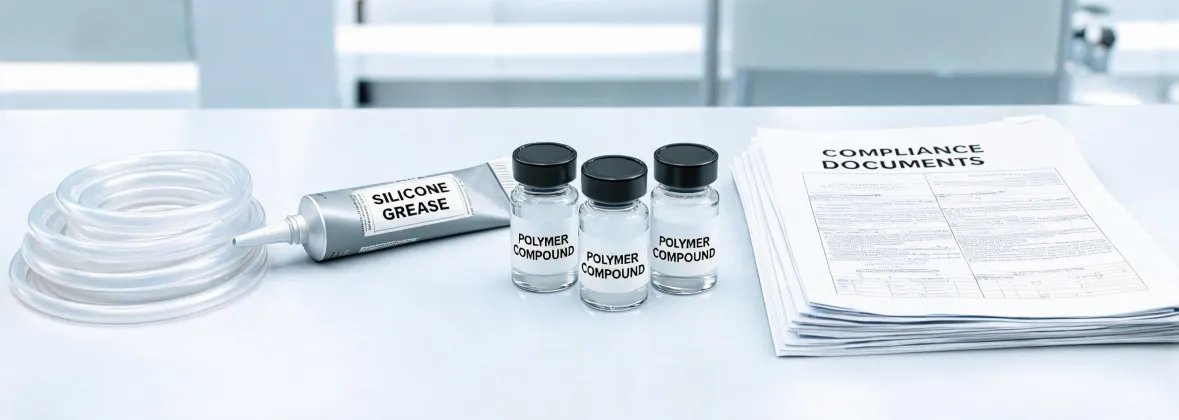
There's No Universal 'Best' Lubricant for Cutting Tools
If you're looking for a single answer on whether silicone or Teflon is better for lubricating knives—specifically for oven-safe or high-heat applications—you're probably going to get frustrated. Because honestly, the answer depends entirely on what you're doing.
I learned this the hard way. In September 2022, I processed a rush order for 240 silicone-coated industrial cutting blades (basically, high-end kitchen knives with a non-stick silicone layer). The spec called for a high-temp lubricant. I assumed Teflon was the safe bet—it's the default for so many applications. The result? Every single knife failed the heat test. $1,200 worth of product, straight to scrap. Plus a 1-week delay and a very unhappy client.
The mistake wasn't picking the 'wrong' lubricant. It was assuming there was a universal 'right' one.
So let's break this down by the three main scenarios I've encountered (and documented) over about 250 knife-related orders since 2020. This was accurate as of Q4 2024, but the lubricant market changes—verify current specs before ordering.
Scenario A: High-Heat Oven Exposure (Above 400°F / 200°C)
The classic case for Teflon (PTFE). If your knives are going into a commercial oven—pizza ovens, bakery lines, industrial food processing—Teflon-based lubricants are the standard for a reason. They handle continuous heat up to around 500°F (260°C) without breaking down.
But here's the thing I didn't know in 2022: Teflon lubricants can react poorly with silicone-coated blades (i.e., a silicone knife). The PTFE particles can actually deform the silicone layer at high temps, causing the non-stick surface to gum up. Never expected that. Turns out the chemical interaction between the lubricant and the blade coating matters way more than the temperature rating alone.
When to choose Teflon:
- Your blades are uncoated metal (stainless steel, carbon steel).
- Temps are consistently above 400°F.
- You need the lowest coefficient of friction (Teflon is slicker).
Best for: Commercial bakery shears, pizza cutter bearings, high-speed slicing blades.
Scenario B: Moderate Heat + Silicone-Coated Blades (Up to 400°F)
This is where Shin-Etsu silicone grease (Shin-Etsu's product line) often wins. If you're using a silicone knife—meaning the blade itself has a silicone coating for non-stick performance—a silicone-based lubricant is chemically compatible. They won't fight each other.
I've been using Shin-Etsu G-501 (their food-grade silicone grease) for moderate-heat applications since that 2022 disaster. It's good up to about 350°F (175°C), which covers most home and light-commercial ovens. The surprise wasn't the heat tolerance—it was how much smoother the action felt compared to Teflon on a silicone blade. The two materials bonded rather than repelled.
Part of me wants to just recommend Shin-Etsu for everything (ugh, brand loyalty). But another part knows it's not right for extreme heat. I compromise by keeping both on the shelf.
When to choose Silicone grease (like Shin-Etsu):
- Your blade has a silicone coating.
- Temps stay below 400°F.
- You need food-grade certification (Shin-Etsu's G-501 is NSF-registered).
Best for: Silicone kitchen knives, coated industrial blades, moderate-temp ovens.
Scenario C: The 'I Need It Now' Rush Order
This is the scenario that changed my whole approach. In March 2024, a client needed 500 oven-safe slicers in 5 days. Normal lead time was 10 days. The lubricant spec was 'high-temp, food safe, quick delivery.' I had two options: a Teflon grease I'd used before (3-day ship, $2.80/unit) or a Shin-Etsu silicone option (1-day ship, $3.50/unit).
The Teflon was cheaper. But the Shin-Etsu could arrive in 1 day. I paid the $0.70 premium per unit—$350 total extra. The alternative was missing a $15,000 contract because we couldn't deliver on time.
I have mixed feelings about rush premiums. On one hand, they feel like price gouging (seriously, $0.70 more for the same quantity?). On the other, the Shin-Etsu distributor had guaranteed inventory; the Teflon supplier said 'probably on time.' After getting burned twice by 'probably on time' promises, I now budget for guaranteed delivery when the deadline is tight. The cost of being wrong is way higher than the premium.
The lesson: In an emergency, pay for certainty. The 'cheap' option that might arrive late is more expensive than the 'expensive' option that arrives today.
How to Tell Which Scenario You're In
Here's a quick decision checklist I use now (and yes, I keep a printed version in my workshop after that $1,200 mistake):
- Check the blade coating. Silicone-coated? → Lean toward silicone grease. Uncoated metal? → Teflon is fine.
- Check your max temp. Above 400°F? → Teflon only. Below 350°F? → Either works, but silicone is better for coated blades.
- Check your deadline. Less than 1 week? → Prioritize delivery speed over unit cost. The 'cheaper' option that arrives late costs more in delays.
According to Shin-Etsu's official spec sheet (shinetsu-silicone.com), their G-501 series is rated for intermittent use up to 350°F and continuous use at 300°F. Per USPS pricing effective January 2025, a small tube of Shin-Etsu grease ships for about $8.50 (First-Class Package). But verify current pricing at their site as rates may have changed.
If you're still unsure—or if you're starting to overthink this like I did in 2022—just remember: there's no perfect lubricant for every scenario. Pick the one that fits your heat, coating, and deadline. That's it. (Note to self: I really should publish this checklist as a separate guide.)